Pricing the Light
Every board is now asking whether its AI agents are worth what they cost. For a brand that makes and moves real product, the answer was never going to show up on the token bill.
By Kelly Breakstone Roth, Co-Founder & CEO of Prysmic · July 2026 · 6 min read
On the afternoon of September 4, 1882, in a generating station at 257 Pearl Street in lower Manhattan, Thomas Edison's crew threw a switch and roughly four hundred lamps came on at once across the offices and shops of the First District.
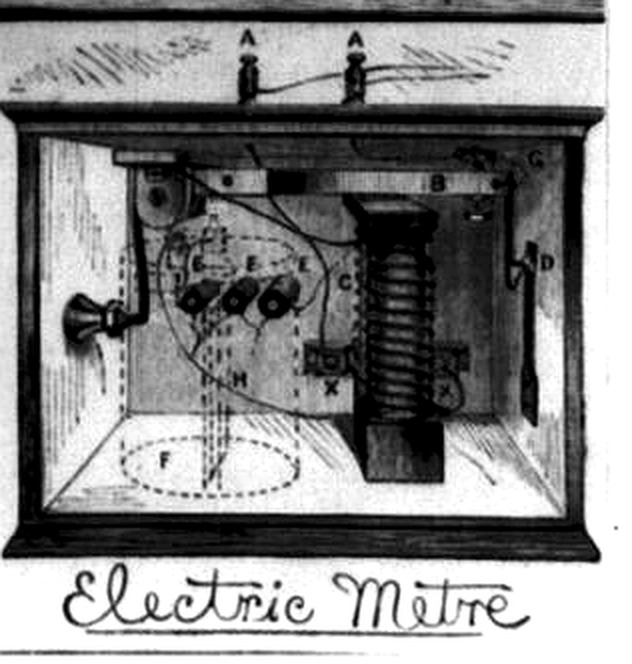
The light was the easy part to sell. The billing was strange. There was no dial on the wall. Each customer's service ran through a small chemical cell, a jar holding zinc plates suspended in solution, and as current flowed, zinc settled onto the plates. Once a month a man from the company came around, collected the plates, and weighed them, and the bill was computed from the weight of the metal. The first one went to the Ansonia Brass and Copper Company on January 18, 1883, for $50.44 (ETHW / IEEE, Pearl Street Station). No customer on the grid could read their own meter. You could stare at the jar all evening and learn nothing about what the evening had cost you.
Edison did not need his customers to understand the meter, because he had already settled the question it could not answer. Nobody on Pearl Street wanted current. They wanted light, and they knew what light was worth because they had been buying it from the gas company for years, so he priced his electricity against gas, close enough that switching was an easy call. The unit on the bill was zinc; the unit in the customer's head was a lit room, and the whole business rested on keeping those two honest with each other.
One hundred and forty-four years later, the jar of zinc is back on the wall. This time it counts tokens.
Why did AI get cheaper while your AI bill got bigger?
If you run a consumer brand, some version of that question has crossed your desk in the last two quarters. The price of AI collapsed. Stanford's AI Index tracked the cost of a fixed level of model capability falling from $20 per million tokens to seven cents by the end of 2024 (Stanford HAI, 2025). And the bills went up anyway. Enterprise spending on language models more than tripled in a single year (Menlo Ventures, 2025), 93% of enterprise AI buyers report blowing through their AI budgets (McKinsey, 2026), and a fifth of companies are now holding back on AI because of what it costs to run, on a line item headed for roughly a quarter of enterprise IT spend within a few years (McKinsey, 2026).
The trap is in the arithmetic. A token got cheaper, but an agent burns so many more of them that the bill went up instead of down. An agent is not a chatbot answering a question. It works in steps, and at every step it re-reads everything it has done so far, which is why a single agentic task can run through a thousand times the tokens of a simple query, most of them spent on the checking and reworking that follow the first draft, with the same task costing thirty times more on one run than the next (McKinsey, 2026). Cheaper units, far more of them, a larger bill.
Edison's customers would have known the shape of it. The price of power dropped almost every year, and anyone who lit a whole building through the night still watched the bill climb. Like Edison's bill, the AI invoice arrives in a unit the customer cannot translate. Four billion tokens last quarter: was that worth it? The meter cannot answer, because tokens count what you burned and never what you got.
A token bill is a jar of zinc. It tells you, to the gram, how much you burned. It says nothing about whether the room is lit.
What is an AI agent actually worth to a consumer brand?
Denominate the worth in outcomes and it usually answers itself. Start with invoice auditing. When we audited $5 million of carrier spend for one brand, we surfaced close to $1 million in billing discrepancies, roughly a fifth of it disputable. Across our live deployments, 5 to 20% of freight and procurement spend turns out to be recoverable once every charge is actually checked against the contract that governs it. Put your own freight number through that range: a brand spending $10 million a year is carrying half a million in recoverable margin at the low end, sitting inside invoices it already paid.
The recovered dollars are only half the outcome. That money leaks because catching it means reading every line of every carrier invoice against a rate agreement, a bill of lading, and a customs entry, thousands of times a month. Some brands staff a person, or a team, to do exactly that, which is real headcount sitting on a thin-margin line. Most cannot, so they sample or skip it, and the leak becomes part of what freight seems to cost. An agent that audits every invoice does two things at once. It returns the margin, and it returns the week nobody had to spend chasing it, or the headcount nobody had to hire to do it. Both are the outcome, and neither one shows up on a token bill.
Freight is the easy one to put a number on. The pattern repeats across the operation. On the inbound side, a container leaves origin, clears customs, and lands at the dock three days late or a few pallets short against the purchase order, and someone has to catch it, reconcile it against the shipment file, reset every downstream ETA, and chase the forwarder, or the miss becomes a stockout nobody saw coming. In demand planning, a single SKU starts outrunning its forecast in one channel while it sits dead in another, and the reorder or the transfer that fixes it waits on a planner with forty other tabs open. The worth of an agent is the same two things every time, the margin it protects and the hours it hands back, and every time the tokens it burns getting there are a rounding error against both. It is the split BCG drew between tools that only advise and agents that act: copilot-style assistants deliver what they called marginal gains, while agentic systems that execute have driven working capital down as much as 30% and EBITDA up 2 to 4 points (BCG, 2026).
On the workflows that move real money, whatever an agent burns in tokens is a footnote against the margin it holds and the hours it hands back.
Do consumer brands need an AI cost-management function?
There is a serious answer forming for the largest enterprises: treat machine work like a managed cost. Route cheap tasks to cheap models, cap what a runaway agent can spend, hand one executive the job of owning cost per outcome. A bank running thousands of its own agentic workflows needs precisely that discipline, and almost none of them have built it yet. If your business is going to operate fleets of its own agents, someone had better own the meter.
Most consumer brands are not that business, and should not want to be. Their advantage lives in product, in brand, in how well they read demand and move on it. It has never lived in the plumbing of freight audits and inbound exceptions. So the useful question for a consumer brand is a build-or-buy question: which outcomes are worth owning outright, and which are worth buying already finished.
An agent that audits your freight invoices is not your moat. The margin it recovers is. Build the moat, buy the rest.
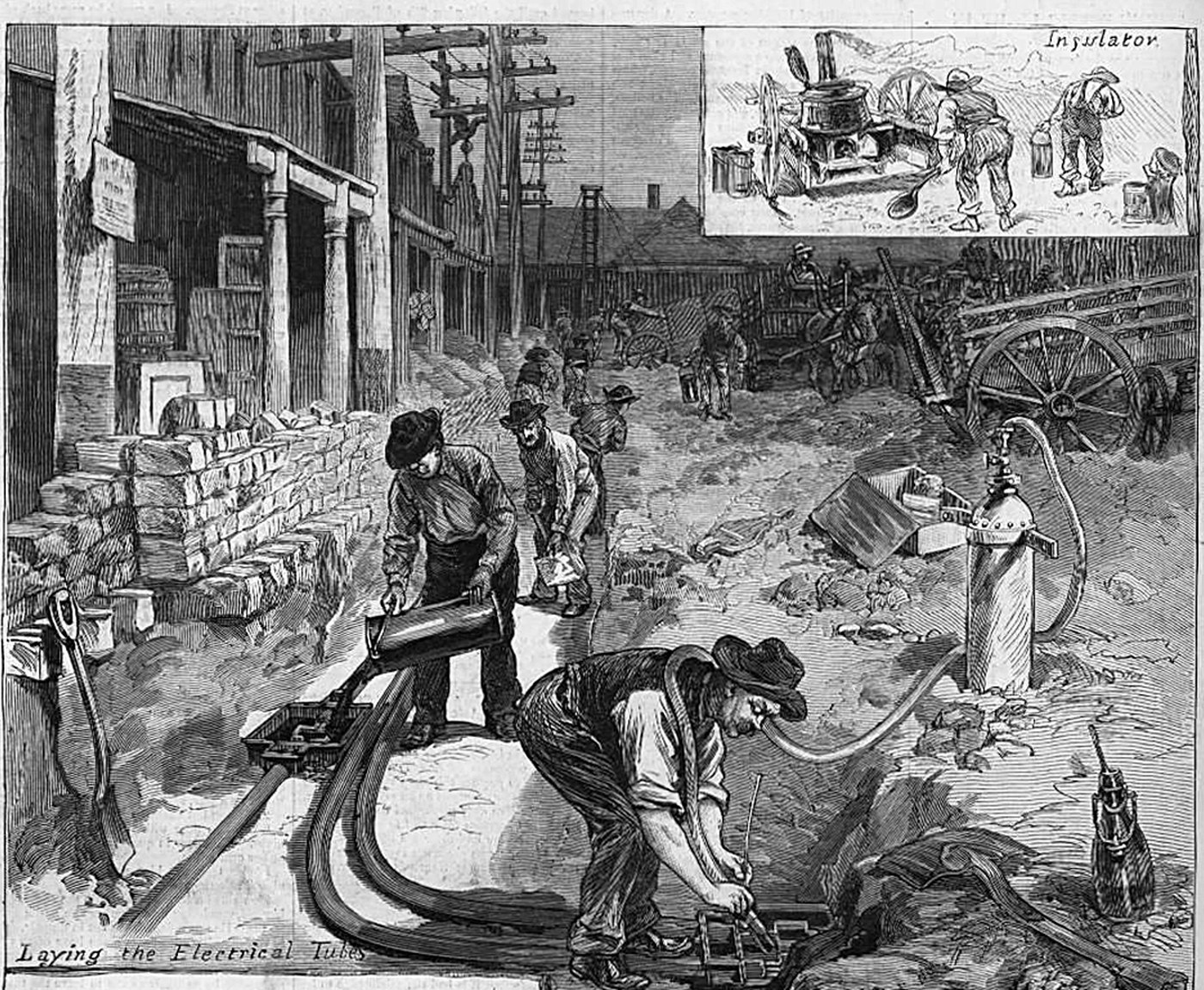
Buying the rest changes who carries the risk. Every driver of a runaway AI bill, the context an agent re-reads at every step, the rework, the same task costing wildly different amounts from one run to the next, is a problem of operating the machinery. Buy the finished outcome instead, and that machinery sits on the vendor's side of the arrangement. You pay for an audited invoice or a resolved exception, and the vendor absorbs how many tokens it took to get there. It is the difference between running a dynamo in your own basement and buying light from the grid. Edison's customers stopped shoveling their own coal the day the central station opened, paid for the light, and let the generating plant worry about the current. The meter is still spinning. It is on the other side of the wall now, and it belongs to the utility, not to you.
Buying the outcome does not mean buying blind. You still set the guardrails, decide what runs on its own and what waits for your sign-off, and require a log of every action the system takes. What changes is the number you manage. It stops being tokens consumed and becomes margin recovered and hours returned, the figures your board was asking about all along.
Four questions to ask an AI agent vendor before you sign
Executives evaluating agents keep asking which model runs under the hood. The better questions are older than software, and they are the ones we would ask you to hold us to.
- Does it own the outcome, or just hand you a recommendation? If the honest answer is that it drafts, suggests, or surfaces, a person still carries the work the last mile, and the hours you were promised back stay on the payroll. The test is whether the loop closes: the invoice audited and the dispute filed, the late container caught and its ETAs reset, the reorder placed, with a person pulled in only when the call is bigger than the guardrails allow.
- Can it be priced by the outcome instead of the tokens? Cost per audited invoice against dollars recovered. Cost per resolved exception against the expedite it prevented. A price quoted in tokens hands you back the meter you were trying to get rid of. A price quoted per outcome keeps it on the vendor's side of the wall.
- Who absorbs the rework and the variance? Most of an agentic task is the checking and repairing after the first attempt, and the same job can cost thirty times more one run to the next. Paid per workflow, that volatility is the vendor's to engineer away. Paid per token, it lands on you. It is why we price by the workflow, not by whatever the machine happens to consume.
- When it is wrong, can you see why? Every action logged, every boundary set in advance, a person brought in the moment the system's confidence drops. An agent you would trust near your ERP has to be able to explain any single action after the fact, because trust in an operation this sensitive is earned by making every step inspectable, not asserted on a security page.
The zinc jars did not last. Within a few years the chemical meter gave way to dials a customer could read, and by then hardly anyone bothered to look, because the argument was over. Shops stayed open past sundown, evenings stretched, and factories that once ran to dusk added a shift. Nobody walking into a lit room in 1900 stopped to ask how the current was priced. Agents in operations are on the same path, and the alarm over their cost today is the sound of a technology still billed in the wrong unit. Pricing the light is the vendor's problem, and how a vendor answers it tells you most of what you need to know about them. What stays on your side of the table is knowing what a lit room is worth to your P&L, and walking into the conversation already holding that number.